

Sleep Consultant Services: How to Build and Price Yours

Parents know what it’s like to spend weeks running on broken sleep because a baby or toddler won’t sleep through the night. It affects just about everything. Your mood, your patience, your ability to function during the day, the list can feel never-ending. And it’s why so many families turn to pediatric sleep consultants for help.
Sleep consultants work with families to build custom plans, establish healthy sleep habits, and provide ongoing guidance. The demand for sleep consultant services is real and growing, and for good reason. When families finally start having a good night’s sleep, everything can begin changing for the better.
If you’re considering starting a career as a sleep consultant, then this guide is for you. Below, I’m discussing which types of services sleep consultants offer. I’ll also share the average cost of a sleep consultant and how to price your services to reflect your worth. When you enter the business with a plan and expert-backed advice, you can feel confident every step of the way.
Sleep Consultant Services: How to Build and Price Yours
Sleep consultant services help families work through sleep challenges and build routines that actually stick. Working with a baby sleep consultant means getting a personalized sleep plan that fits your child and your family’s lifestyle. They use their knowledge from their sleep consultant training to provide dedicated and personalized techniques for your baby’s sleep. It’s not a one-size-fits-all approach, and that’s exactly what makes it effective.
Beyond the plan itself, sleep consultants educate parents on the science behind what they’re doing and why it works. That knowledge is what allows families to maintain healthy sleep habits long after the sleep-coaching work ends.
When you understand the impact quality sleep has on a family, it becomes clear just how valuable this work is. That’s why I’m walking you through exactly what sleep consultants offer. Plus, I’ll share what it takes to build a sleep consulting business of your own.
What Is a Sleep Consultant?
Sleep consultants are certified professionals who help families build healthier sleep habits through personalized coaching, education, and evidence-based behavioral strategies. Most specialize in working with infants and toddlers, supporting families during one of the most sleep-deprived seasons of their lives.
The process starts with a thorough assessment of the child’s sleep patterns. From there, the consultant factors in age, developmental stage, and the family’s circumstances. By doing so, they introduce effective sleep training methods to implement. Sleep consultants offer a thoughtful, individualized approach rather than a formula to every family.
For a deeper look at what the role actually involves, check out my post, “What Is a Pediatric Sleep Consultant?”
What Do Sleep Consultants Do?
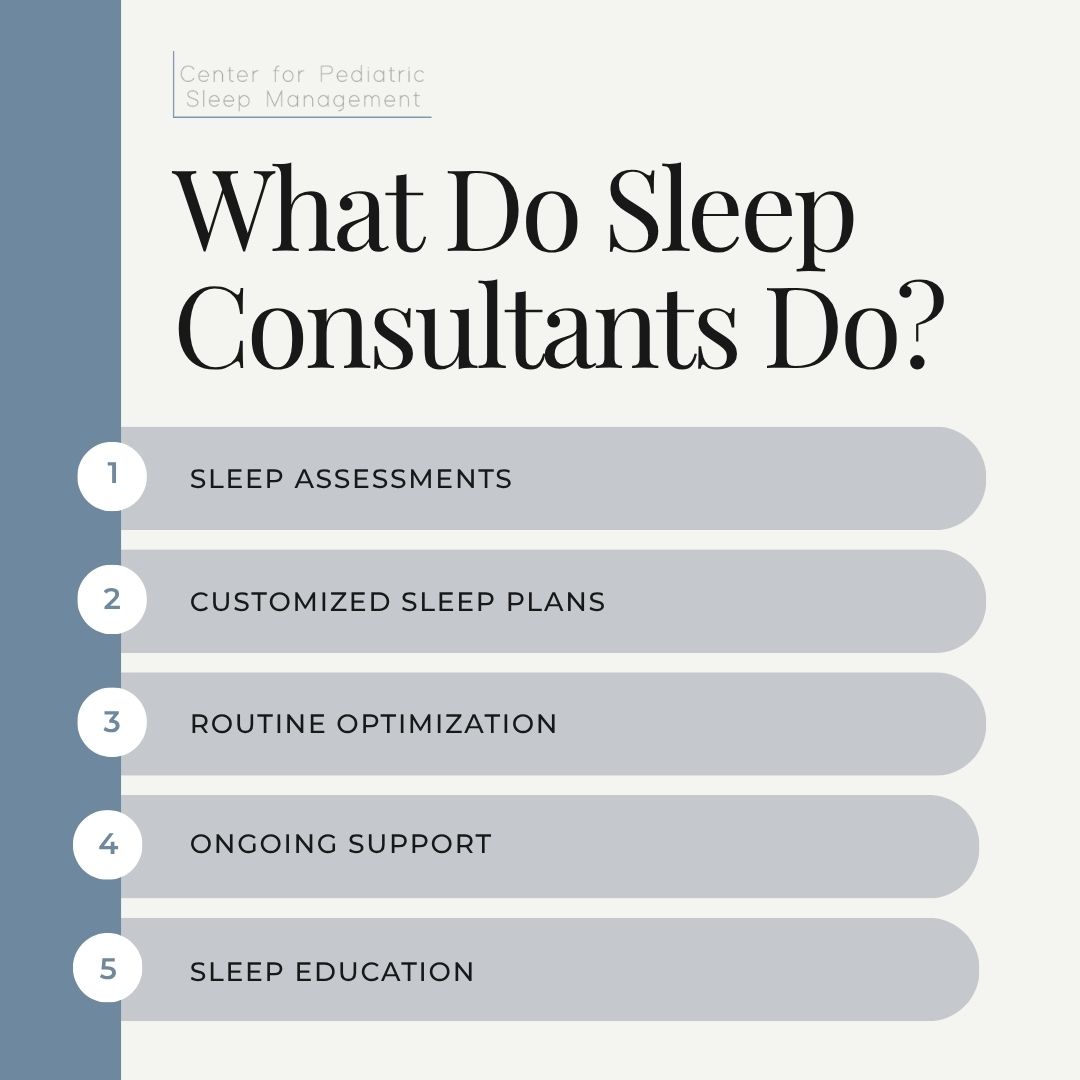
Sleep Assessments
Before making any recommendations, a sleep consultant needs a clear picture of what’s happening in the household. Parents walk through how long it takes their baby to fall asleep, current bedtime routines, and sleep issues they’re facing.
That information is the foundation for everything that follows. The more honest and detailed parents can be during this stage, the more tailored and effective the recommendations will be.
Customized Sleep Plans
Based on the intake discussion, the sleep consultant develops a tailored sleep plan for the child’s age and developmental stage. They will also consider the family’s lifestyle and how much they’re realistically able to commit to the process. A plan that doesn’t account for those factors isn’t truly personalized; it’s just generic advice.
The sleep plan addresses the specific challenges the family faces. This could look like frequent night wakings, trouble putting the baby to sleep, or inconsistent nap schedules. The sleep consultant sets out a clear path toward building healthier, more sustainable sleep habits.
Routine Optimization
As parents begin implementing the sleep plan, questions come up, and things don’t always go as expected. That’s completely normal, and it’s exactly why ongoing support matters. A sleep consultant reviews what’s working and what isn’t. Then, they adjust the plan accordingly. This could mean changing nap schedules, feeding routines, bedtime timing, or the sleep environment itself. The process continues until a routine is in place that actually works for that specific family.
Ongoing Support
One of the most valuable things a sleep consultant offers is ongoing support. Parents don’t have to figure out every bump in the road on their own. When questions come up or something isn’t working, they have a professional in their corner to reach out to.
Sleep Education
A sleep consultant’s role goes well beyond recommending sleep training techniques. Education is a core part of the job. When parents understand the why behind the recommendations, they can stay consistent and make confident, informed decisions.
Sleep consultants explain how sleep cycles work, what regressions look like, and what to expect at each developmental stage. This foundational knowledge is what turns a good sleep plan into lasting change.
Sleep Consulting Services
One-on-One Virtual Consultations
The process typically begins with a one-on-one virtual consultation. This initial call is where the sleep consultant gets a clear picture of the family’s situation. The family will explain what they’re dealing with, what they’ve already tried, and what they’re hoping to achieve. It sets the foundation for everything that follows.
From there, ongoing virtual check-ins throughout the process are standard. Staying connected with clients as they implement the plan is what allows a sleep consultant to catch issues early. They can then make timely adjustments and keep families on track.
Newborn Sleep Support
Some sleep consultants choose to specialize specifically in newborn sleep support. Newborns have their own distinct sleep patterns and developmental needs. That means working with them effectively requires a solid understanding of what normal newborn sleep actually looks like. It’s a different kind of work than sleep consulting with older infants and toddlers. And while not every consultant focuses on this age group, it’s often highly rewarding for those who choose to.
For a deeper look at newborn sleep, check out my posts “Essentials for Newborn and Infant Sleep” and “Sleep Consultant for Newborn.”
Infant and Toddler Sleep Training Guidance
Working with a sleep consultant means getting far more than a downloadable PDF with generic instructions. It means receiving a sleep plan tailored to your child’s developmental stage, temperament, and sleep challenges.
Sleep consultants bring in-depth knowledge of multiple sleep training methods, including when to use each one and when to adjust. This expertise is what separates professional guidance from whatever comes up first in a Google search.
Nap Transition Support
Naps are a critical piece of the overall sleep puzzle. Getting them right makes a significant difference in how well a baby sleeps at night. Sleep consultants help parents navigate nap transitions by identifying the right timing, appropriate wake windows, and reliable sleep cues.
They then build a daytime schedule that adjusts nap timing and frequency to keep the baby in that sweet spot. They’re rested enough to function but not so overtired or undertired that bedtime becomes a battle.
Bedtime Routine Planning
A consistent bedtime routine is one of the most powerful tools in a sleep consultant’s toolkit. It signals to the baby that gentle sleep is coming. Over time, the routine itself becomes a cue that the body starts responding to before the baby even hits the crib.
Sleep consultants work with families to build a bedtime routine that fits their lifestyle and feels realistic. Consultants design it around the child’s daytime nap schedule, developmental stage, and behavior patterns. That means it will fit seamlessly into the broader sleep plan rather than working against it.
Overnight Consulting Services
Overnight consulting is exactly what it sounds like. A sleep consultant comes to the home during nighttime hours and works directly with the child. They handle night wakings, feedings, and settling so parents can actually get some rest. Meanwhile, the sleep consultant implements the sleep plan in real time.
This type of service is particularly popular for newborns and young infants. More specifically, hands-on support during those early weeks can be incredibly helpful for establishing healthy sleep habits. Some consultants offer this as an in-home service, while others take a virtual approach. They will coach parents through an earpiece or video call as they respond to their child’s needs overnight.
It’s worth noting that not all sleep consultants offer overnight services. At CPSM, we specifically train our graduates in the virtual model. That said, knowing this service exists is helpful for anyone exploring the full range of what they can offer.
Sleep Schedule Troubleshooting
When something isn’t working, most parents’ first instinct is to scrap the sleep plan entirely and try something new. A sleep consultant takes a different approach. Rather than starting over, they troubleshoot methodically, identifying what specifically isn’t working and making precise adjustments to address it. More often than not, the issue is something targeted that they can correct without overhauling the entire plan.
Multiple Child Sleep Planning
For families with more than one child, some sleep consultants offer sleep plans that address everyone in the household. Each child gets a plan tailored to their age. Meanwhile, they design the overall structure to work in sync so that bedtime doesn’t feel like a rotating series of crises.
How to Price Sleep Consulting Services
The first question many parents have is: “How much does a sleep consultant cost?” And, fortunately, one of the best parts of building your own sleep consulting business is setting your own rates. Your pricing should reflect your expertise, the value you bring, and the scope of services you offer. Below are some recommendations to help you think about how to structure your pricing.
Want a deeper look at how to set up your sleep consulting services? Check out my post “Online Sleep Consultant: Build a Career on Your Own Terms.”
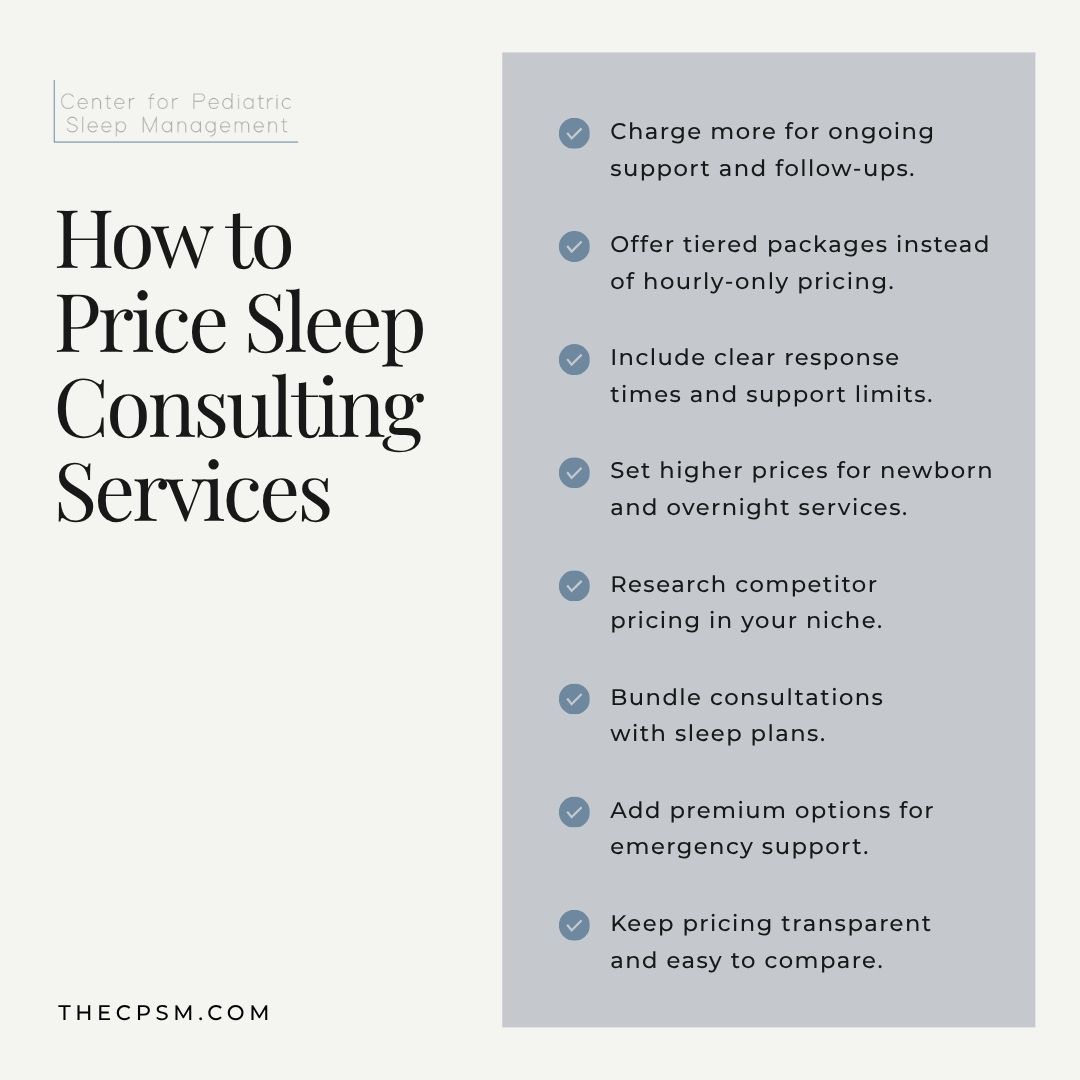
Charge more for ongoing support and follow-ups.
Ongoing support is a particularly valuable aspect of sleep consulting. Parents need reassurance, answers to questions, and plan adjustments as their child moves through the process. Reviewing sleep logs, responding to messages, and making scheduling tweaks all take time, and your pricing needs to reflect that.
When you don’t price follow-up support appropriately, it’s easy to find yourself providing hours of unpaid guidance. That’s a fast track to burnout, and it’s completely avoidable with a clear structure from the start.
You can offer weekly check-ins or unlimited messaging for two weeks. Building follow-up access into your packages with a defined scope sets expectations upfront and justifies a higher price point.
Offer tiered packages instead of hourly-only pricing.
Tiered packages make it easier for families to understand what you offer and choose the support that fits their budget. When you bill clients hourly, they often hesitate to reach out with questions, worried about the cost adding up. That hesitation actually undermines the plan’s success. That’s because staying in touch and getting timeline support is what keeps families on track.
A basic package might include a sleep plan and one follow-up call. Meanwhile, a premium package covers daily messaging support and multiple check-ins over several weeks. Giving families clear options also tends to increase your average revenue per client. That’s much better for your business and better for the families you serve.
Include clear response times and support limits.
Being clear about your response times and availability from the beginning protects both your time and your client’s expectations. When families don’t know whether they’ll hear back in an hour or three days, it creates anxiety and quietly erodes their confidence.
Something as simple as communicating “responses within 24 hours on weekdays” gives clients the reassurance they need. It also allows you to maintain a sustainable workload. And, ultimately, clear boundaries give you something concrete to point to if a client oversteps, making those conversations much easier to navigate if necessary.
Set higher prices for newborn and overnight services.
Newborn support and overnight services require a significantly higher level of physical and emotional investment than standard virtual consultation. Your pricing needs to reflect that. Overnight work means sacrificing your own sleep, and that personal cost is real. It’s not comparable to taking a phone call during the day, and you shouldn’t price it that way.
Newborn clients also tend to need more frequent touchpoints and reassurance than families with older infants. This is simply because newborn sleep changes so rapidly in those early weeks. The level of availability that comes with this type of work is specialized. Pricing it at a premium communicates that.
Research competitor pricing in your niche.
Knowing what other sleep consultants in your market are charging gives you a useful starting point. Look at consultants with similar certifications, experience levels, and target audiences to get the most relevant comparison.
Pricing too low can signal inexperience and attract clients who don’t value your expertise. Pricing too high without the track record to support it can limit inquiries, especially early on. Competitor research helps you find a reasonable range, but your final pricing should reflect your unique strengths and your specific audience.
Bundle consultations with sleep plans.
A written sleep plan on its own is rarely enough to get a family real results. Without guidance on how to implement it properly, even the best plan tends to fall flat. Bundling a consultation call with the sleep plan increases the value for the client. It also creates a natural opportunity to add follow-up support.
Families who get to ask questions and gain clarity on the plan are more likely to follow through and see results. That means better outcomes, better testimonials, and more referrals for your business. Bundled pricing is also simpler to communicate than itemized services, making it easier for potential clients to understand what they’re getting.
For more about how to get positive testimonials, listen to my podcast episode “Building Confidence and a Thriving Sleep Consultant Business.”
Add premium options for emergency support.
Sleep regressions and sudden schedule disruptions don’t always happen at convenient times. Some families need support quickly when they do. Offering same-day or after-hours access as a premium add-on is a practical way to meet the urgent needs of certain clients.
Standard packages come with planned response windows for a reason. Positioning immediate access as a separate, higher-priced option is both fair and transparent. It creates an additional revenue stream from clients who need extra support in a pinch. Plus, it reinforces an important message: your time and availability have real value, and around-the-clock access is not standard.
Keep pricing transparent and easy to compare.
Displaying your pricing clearly on your website removes friction for potential clients. It also naturally filters out those who aren’t aligned with your rates. Vague or hidden pricing creates doubt. In a field where families are already navigating a stressful and vulnerable season, the last thing they need is uncertainty.
Get your sleep consultant certification and structure your services as a business with the CPSM.
Sleep consultant services typically include an assessment of the baby’s current sleep patterns, a tailored sleep plan, and ongoing support. Beyond that, the way you structure your services is largely up to you. Some consultants specialize in newborn sleep, others focus on overnight support. Many build out tiered packages that give families options at different price points. That flexibility is one of the best things about this career.
The first step toward building that business is getting certified, and the Center for Pediatric Sleep Management (CPSM) is the best place to start. Our self-paced online sleep consultant certification course covers everything you need to know. Modules include infant sleep science, sleep-training methods, and effective communication with parents.
What sets CPSM apart is what comes after the sleep content. There’s a dedicated section about launching and growing your business. That includes how to structure your services, market yourself, and price your packages to reflect your worth. This combination of sleep education and business training in one program is something you won’t find in other certifications.
Are you ready to find out if CPSM is the right fit for you? Schedule a discovery call with me, founder Jayne Havens, and let’s talk through it.