

Safe Sleep Certification: The Non-Negotiable for Infant Care

Every baby sleep consultant should have a solid understanding of safe sleep practices. The core of the role is helping families build healthy sleep habits and implement sleep training methods. However, educating parents about infant safe sleep practices is one of the most valuable things you can offer. And the best way to build that knowledge with confidence is through a safe sleep certification program.
Safe sleep certifications are relevant across a wide range of professions, including sleep consultants, healthcare providers, and childcare workers. But beyond the knowledge itself, a certification adds real credentials to your professional profile. It also signals to families that you take infant safety seriously.
If you’re considering becoming a baby sleep consultant and want to understand how safe sleep certification fits into this process, this post is for you. I’m covering what a safe sleep certification actually is and what these programs cover. Plus, I’ll explain how to choose the right one for your goals. By the end, you’ll have a clear picture of how to take that first step toward becoming a certified sleep consultant.
What Is Safe Sleep Certification?
A safe sleep certification is a training program that teaches professionals how to create and maintain safe sleep environments for infants. The content focuses on guidelines set by the American Academy of Pediatrics (AAP). It covers best practices specifically to reduce the risk of sleep-related injuries and sudden unexpected infant death (SUID).
For professionals who work with infants, this certification is more than a credential for your resume. It deepens your understanding of the science behind infant sleep. But most importantly, it ensures that every family you work with gets guidance that draws directly from evidence-based safety standards. That’s not something to take lightly when you’re working with the most vulnerable members of a household.
Why Is Safe Sleep Certification Important?
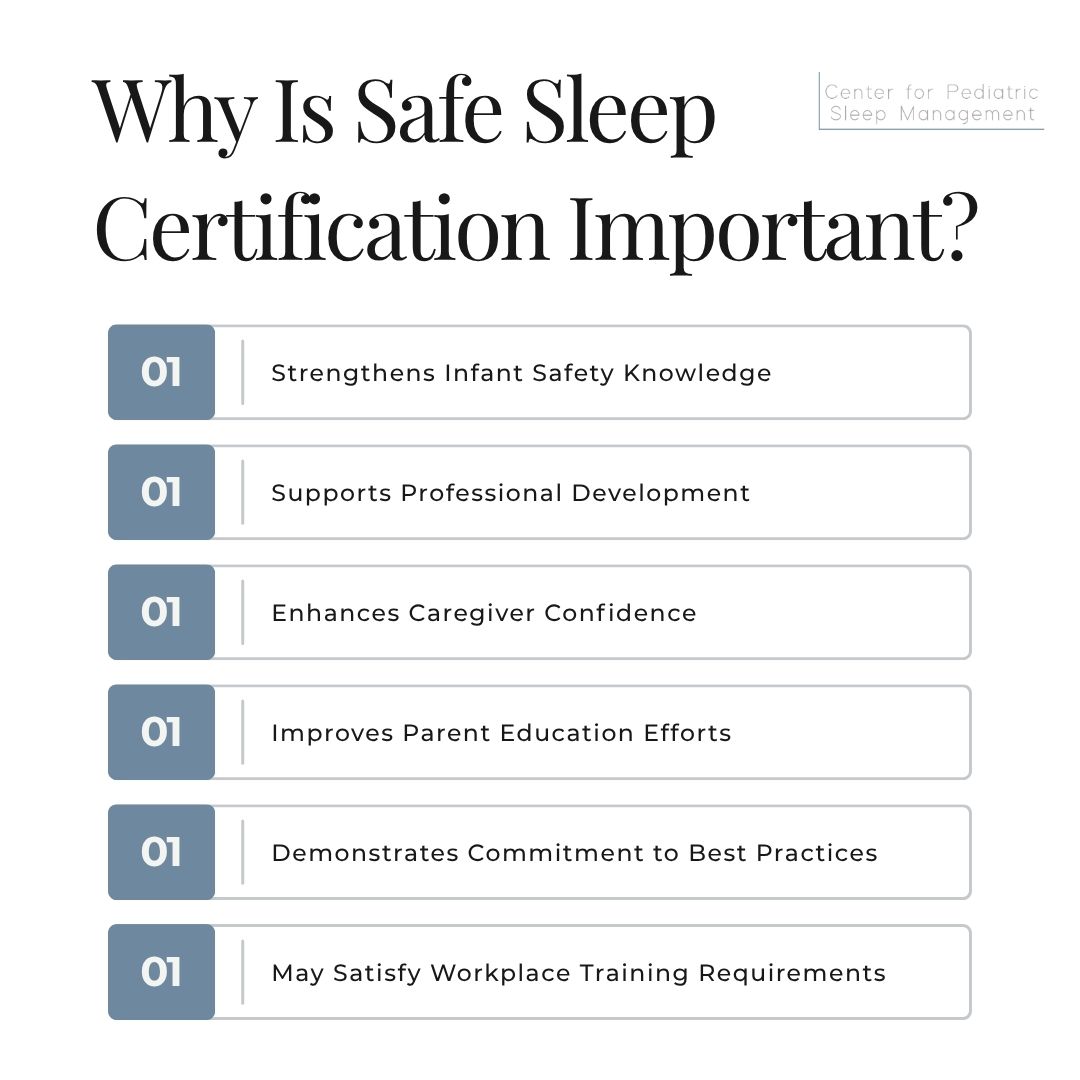
Strengthens Infant Safety Knowledge
Putting a baby to sleep safely involves a lot more than laying them down in a crib and walking away. It requires understanding the risk factors associated with different sleep situations and knowing how to create an environment that minimizes those risks. A safe sleep certification gives you the evidence-based knowledge to do exactly that.
Supports Professional Development
Every certification and credential you add to your professional profile is an investment in your growth. When you dedicate time to learning topics that directly support your role, the people you work with notice. Clients trust you more, colleagues respect your expertise, and families feel more confident placing their child’s care in your hands.
Enhances Caregiver Confidence
When families see that you hold a safe sleep certification, it builds immediate confidence. That credential signals that you’ve done the work and that your recommendations are grounded in recognized standards. For parents entrusting you with their little one, that reassurance can be the deciding factor in choosing to work with you.
Improves Parent Education Efforts
A significant part of working with families and caregivers as a sleep consultant is education. You’re not just handing over a plan; you’re teaching parents how to implement it safely and confidently. A safe sleep certification gives you the foundation to do that well. More specifically, it equips you with the knowledge to explain the what and the why behind safe sleep practices.
Demonstrates Commitment to Best Practices
Pursuing a safe sleep certification sends a clear message to the families you work with and to the broader professional community. It shows that you’re committed to staying current and that you take evidence-based practice seriously. Plus, it shows that you’re not just doing the minimum to call yourself a sleep consultant! That level of dedication builds trust and authority in a way that simply claiming expertise can never match.
May Satisfy Workplace Training Requirements
In some professional settings, employers don’t just recommend a safe sleep certification; they require it. This is particularly true in hospital settings that care for infants. Programs like the Cribs for Kids National Safe Sleep Hospital Certification set the standard here. If you work in a regulated healthcare or childcare setting, check with your employer or association about the required certifications.
Who Should Get Safe Sleep Certification?
Safe sleep certifications are relevant well beyond the sleep consulting world. Anyone who works with or cares for infants can benefit from this kind of training, including:
- Nurses
- Maternity and neonatal staff
- Pediatric healthcare professionals
- Childcare providers
- Early childhood educators
- Foster parents and caregivers
- Public health professionals
- Baby sleep consultants
For those interested, I discuss the process further in my post, “How to Become a Certified Sleep Consultant.”
What Topics Are Covered in Safe Sleep Certification Training?
Safe Sleep Positioning
Placing babies on their backs to sleep is the safest position until they can roll both ways independently. Understanding the reasoning behind that recommendation is an important part of the safe sleep certification curriculum. Beyond this, certification training also discusses when and how sleep position guidance evolves as babies develop.
Crib and Sleep Environment Safety
Creating a safe sleeping space is another core topic that safe sleep certification programs cover. That includes understanding why you should keep a crib clear of loose items to prevent accidental suffocation. Plus, you’ll learn when it becomes developmentally appropriate to introduce certain items as the baby grows.
For sleep consultants, this knowledge is foundational. You can’t make confident, responsible sleep recommendations to families without it.
Sudden Infant Death Syndrome (SIDS) Risk Reduction
Each year, approximately 1,500 infants under the age of one die from SIDS in the United States. There is no single known cause, but there are practices that reduce the risk. Understanding safe sleep, for example, is one of the most important prevention methods. The impact of that education is measurable, too. SIDS cases have decreased by 78% since 1980. This is largely due to the Back to Sleep campaign and the widespread adoption of safe sleep practices.
For anyone working with infants, this is essential knowledge. And it’s one of the most significant topics a safe sleep certification program addresses.
Safe Swaddling Practices
Swaddling is one of the most common techniques used to help newborns sleep better. The snug wrap feels like being back in the womb and can be effective at settling a fussy baby. But knowing how to swaddle safely, and just as importantly, knowing when to stop, is a critical part of safe sleep practice.
Room-Sharing Recommendations
The AAP recommends that infants sleep in the same room as their parents for at least the first six months. The baby should have their own separate sleep surface, such as a crib or bassinet, within arm’s reach. This setup makes it easier to monitor the baby and respond to nighttime feedings.
A safe sleep certification covers how to make room-sharing work safely. Plus, it explains what precautions families should be aware of when setting up the arrangement.
Unsafe Sleep Products and Environments
What feels comfortable and cozy to an adult is actually a safety hazard for an infant. Babies need a firm, flat sleep surface free of pillows, blankets, bumpers, and plush toys. A safe sleep certification covers which products and sleep environments to avoid and why. This means you’ll be able to guide families toward safer setups with confidence and clarity.
Parent and Caregiver Education Techniques
When you’re working with families to implement safe sleep practices or sleep training methods, education is a core part of the job. A strong safe sleep certification course doesn’t just teach you the content. It also teaches you how to communicate that content to parents effectively.
Your time with each family is brief, but the knowledge you leave them with isn’t. When parents truly understand safe sleep, they carry that foundation forward long after your work together finishes. That lasting impact is a meaningful part of the career.
How to Choose a Safe Sleep Certification Program
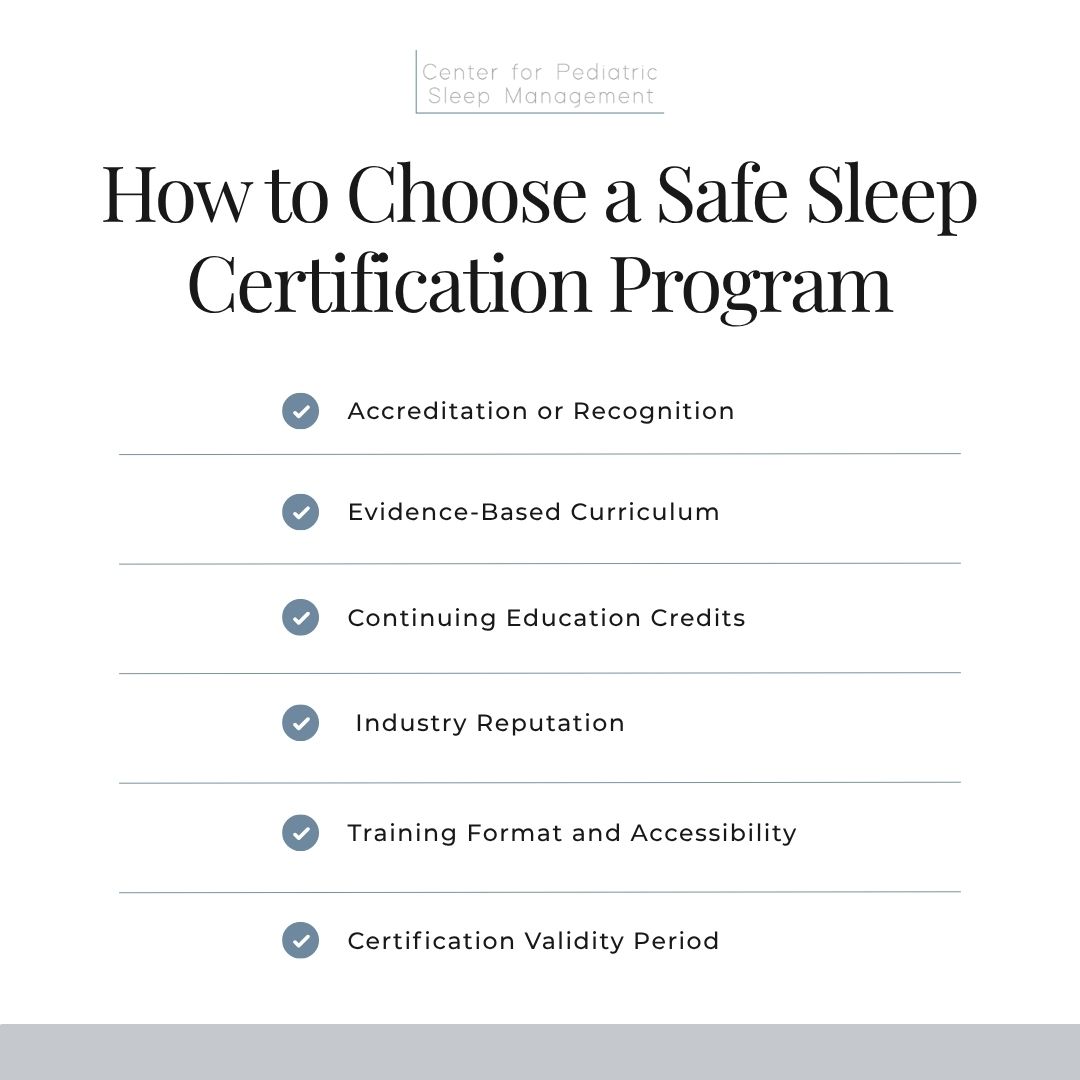
Accreditation or Recognition
Safe sleep education is an unregulated field, and it’s important to look beyond marketing claims and focus on the quality of the curriculum itself. A quality safe sleep certification program should be grounded in research, align with established infant sleep safety recommendations, and be taught by professionals with relevant expertise.
The best course explains not only what the recommendations are, but also why they matter and how to apply them. Rather than focusing on courses that claim to be “accredited,” evaluate the credibility. Focus on the organization providing the training, the instructors’ qualifications, and whether the content reflects current safe sleep best practices.
Evidence-Based Curriculum
The curriculum should focus on current guidelines from recognized organizations like the American Academy of Pediatrics. Safe sleep research evolves, and what experts considered best practice a few years ago has often changed since. Look for programs that cite their sources and commit to keeping their materials current.
Continuing Education Credits
Many childcare and healthcare professionals must complete continuing education hours to maintain their licenses. A quality, safe sleep certification program should offer credits recognized by licensing boards.
Before enrolling, confirm that your specific licensing board or employer accepts the credits. Recognition can vary by state, profession, and regulatory agency. That’s why checking ahead of time saves you from completing a program that doesn’t count.
Industry Reputation
Take the time to research the organization behind the certification before you commit. Look for reviews from childcare and healthcare professionals who have completed the program, as well as endorsements from pediatric health organizations. A program with a strong reputation in the field is more likely to carry weight with employers.
While newer or lesser-known programs aren’t automatically red flags, they do warrant a closer look. The burden of proof is higher when the track record is shorter.
Training Format and Accessibility
Consider whether the organization offers the program online, in person, or in a hybrid format. Then think about which format works for your schedule and learning style. Online programs offer real flexibility, but they should still include interactive elements and assessments. This ensures you’re actually retaining the material rather than just clicking through.
The Center for Pediatric Sleep Management’s sleep consultant course is entirely self-paced and online. That means you can work through the material on a schedule that actually fits your life. Most students complete the course in about six weeks, though you’re never rushed. The goal is genuine understanding, not just getting to the finish line.
Certification Validity Period
Before enrolling, find out how long the certification remains valid and what the renewal process looks like. Safe sleep guidelines update periodically, and a program that requires renewal on a regular basis is actually a good sign. It means the program takes evolving research seriously and expects its certified professionals to stay current.
Is Safe Sleep Certification Worth It?
A safe sleep certification is a valuable credential, particularly for sleep consultants. It gives you the foundational knowledge to help families create safer sleep environments for their baby. Plus, you gain the confidence to educate parents on maintaining those practices long after your work together ends.
That said, not all safe sleep certifications are the same, and the right program depends on your profession and your goals. Nurses, public health professionals, and others in regulated fields may require separate certifications that sleep consulting does not.
For sleep consultants specifically, the CPSM sleep consultant certification course is the place to start. We teach the science of safe sleep alongside sleep training methods.
And unlike most other programs, we dedicate an entire section around how to launch and grow your own sleep consulting business. That combination of sleep education and business training in one program is something you won’t find anywhere else.
Become a certified sleep consultant and learn safe sleep practices with the CPSM course.
Earning a safe sleep certification adds real credibility to your work with infants and families. And while not all programs are equal, the right certification for you depends on your profession and goals. For sleep consultants, the focus should be on finding a program that prepares you to do your work well.
The CPSM sleep consultant certification covers the science of safe sleep alongside the other fundamentals you need to build a successful practice. By the time you complete the course, you’ll have everything you need to launch your business from the ground up.
If that sounds like the kind of program that aligns with where you want to go, I’d love to connect. Schedule a discovery call with me, Jayne Havens, founder of CPSM. We’ll walk through what the course covers and whether it’s the right fit for you. Not quite ready to commit yet? Download my free ebook Launching Your Career as a Sleep Consultant. You’ll get a closer look at what the career actually involves before you take the next step.