

Wake Windows by Age: A Sleep Consultant’s Reference Guide
Ask any new parent how nap time is going, and you’ll probably get a mix of hope and confusion in response. One day the baby drifts off easily. The next, bedtime turns into a standoff. Honestly, so much of that unpredictability comes down to timing, and timing is exactly what wake windows help you understand.
When you know roughly how long your baby can happily stay awake, it gets easier to spot when they may also be ready for sleep. That awareness creates a more predictable daily rhythm for everyone. No more guessing, no more scrambling for another list of tips you found at 3 am.
This guide is meant to be a practical reference you can come back to as your child grows. I’ll walk you through what wake windows are, when they start, age-by-age guidance, when they get longer, and what to actually do with your baby during awake time. If you’re a parent craving a little more calm, or someone curious about the work behind helping families sleep, this one’s for you.

Wake Windows by Age: A Sleep Consultant’s Reference Guide
The amount of “awake time” your baby can tolerate generally increases as they mature. A sleepy newborn might last less than an hour, while a busy toddler can stay happily engaged for hours. That gradual shift is normal, and it’s the whole reason wake windows by age are so handy as a starting point.
Here’s the important part: these ranges are guidelines, not strict schedules. Every baby is a little different. Use age as your anchor, then pay attention to your own child. Watch your baby’s sleep patterns and read their signs of tiredness, because your individual child always tells you more than a chart can.
In my work with families, and in what we teach at the Center for Pediatric Sleep Management, the sweet spot is somewhere between the clock and the cues. Neither one wins alone.
What Are Wake Windows?
By definition, a wake window is the amount of time your baby is comfortably awake between naps or other periods of sleep. It’s the stretch from the moment your baby wakes up to the moment they’re ready to sleep again.
Think of it as the daylight between the two ends of a nap. A wake window starts when your baby opens their eyes, and it ends when your baby is tired enough to settle back down.
Why does this matter so much? Because timing shapes how easily babies fall asleep. When you catch that window, your baby is calmer and more receptive to rest. Miss it, and you often end up with an overtired baby who fights sleep even though they clearly need it.
For parents trying to make sense of their baby’s sleep patterns, wake windows give you something concrete to work with. Instead of reacting to every fussy moment, you start to see a rhythm. And in babies and toddlers, that rhythm is often the missing piece.
When Do Wake Windows Start?
You can begin paying attention to wake windows from the newborn stage, though in those early weeks, they’re very short and pretty inconsistent. A brand-new baby might only stay awake long enough to feed and have a quick diaper change before drifting off again.
The concept becomes genuinely useful a bit later, usually once your baby moves out of the sleepy newborn haze and develops more predictable periods of awake time. Around the two-to-three-month mark, many parents notice their baby staying alert a little longer and settling into looser patterns.
That said, there’s no magic date. Some babies show clearer rhythms early, others take their time. Watch, don’t force. When you notice your baby is awake for similar stretches day to day, that’s your cue that wake windows can start guiding your routine.

Age-Appropriate Wake Windows
Below is general wake window guidance broken down by developmental stage. Remember, these age ranges are estimates. Your individual baby may need shorter wake windows or longer wake windows depending on temperament, nap quality, and the day itself.
Newborn (0 to 3 Months)
Newborns tire quickly, so their windows are short, often 45 to 90 minutes. At this age, awake time is mostly feeding, brief alertness, and a fresh diaper. Don’t stress about precision here. Watch for early signs your baby is tired and offer sleep before the overtired tears begin.
For those interested in building a meaningful career out of helping parents at this stage, you can absolutely do so. Read my article, “Newborn Specialist Training: Everything You Need to Start.”
3 to 4 Months
Now you’ll likely see windows stretch to roughly 75 minutes to 2 hours. This is also when the well-known sleep progression often shows up, so patterns may wobble. Keep an eye on your baby’s wake windows and stay flexible while things settle.
4 to 6 Months
Expect windows around 2 to 2.5 hours as naps begin to consolidate. Babies this age are more social and engaged, so awake time can include play. Still, watch closely, because it’s easy for a stimulated baby to slide into overtired territory.
6 to 9 Months
Windows commonly land near 2.5 to 3 hours, and most babies settle into a two-to-three nap rhythm. With more mobility comes more stimulation, so maintaining good timing helps your baby fall asleep independently more easily.
9 to 12 Months
Look for windows of about 3 to 4 hours, often on two naps. Many babies get an energy boost here, but longer wake windows shouldn’t mean skipping rest. Balance the activity with predictable sleep.
12 to 18 Months
Windows widen to roughly 3.5 to 5 hours as many toddlers transition from two naps to one. That shift can be bumpy, so give it grace and watch the cues.
18 Months to 4 Years
By now, wake windows can run 5 to 6+ hours on a single nap, with bedtime carrying the rest of the day. Awake time is full of learning and play, which is wonderful, but it’s equally important to keep an anchor on nap and bedtime timing.
When Do Wake Windows Get Longer?
Wake windows generally get longer in a fairly steady, predictable direction: up. As your baby’s nervous system matures and naps consolidate, the amount of time they can comfortably stay awake grows, too.
You’ll often notice this at natural turning points, like a nap transition or a developmental leap. Suddenly your baby is awake and content for a longer stretch, or they start protesting a nap they used to take. That’s usually a sign it’s time to gently extend that window.
The trick is to follow the trend without forcing it overnight. Longer wake windows arrive gradually. If your baby is happily awake and not showing signs of overtiredness, you have a little room to stretch. If the meltdowns creep in, ease back. Over a 24-hour period, small adjustments add up.
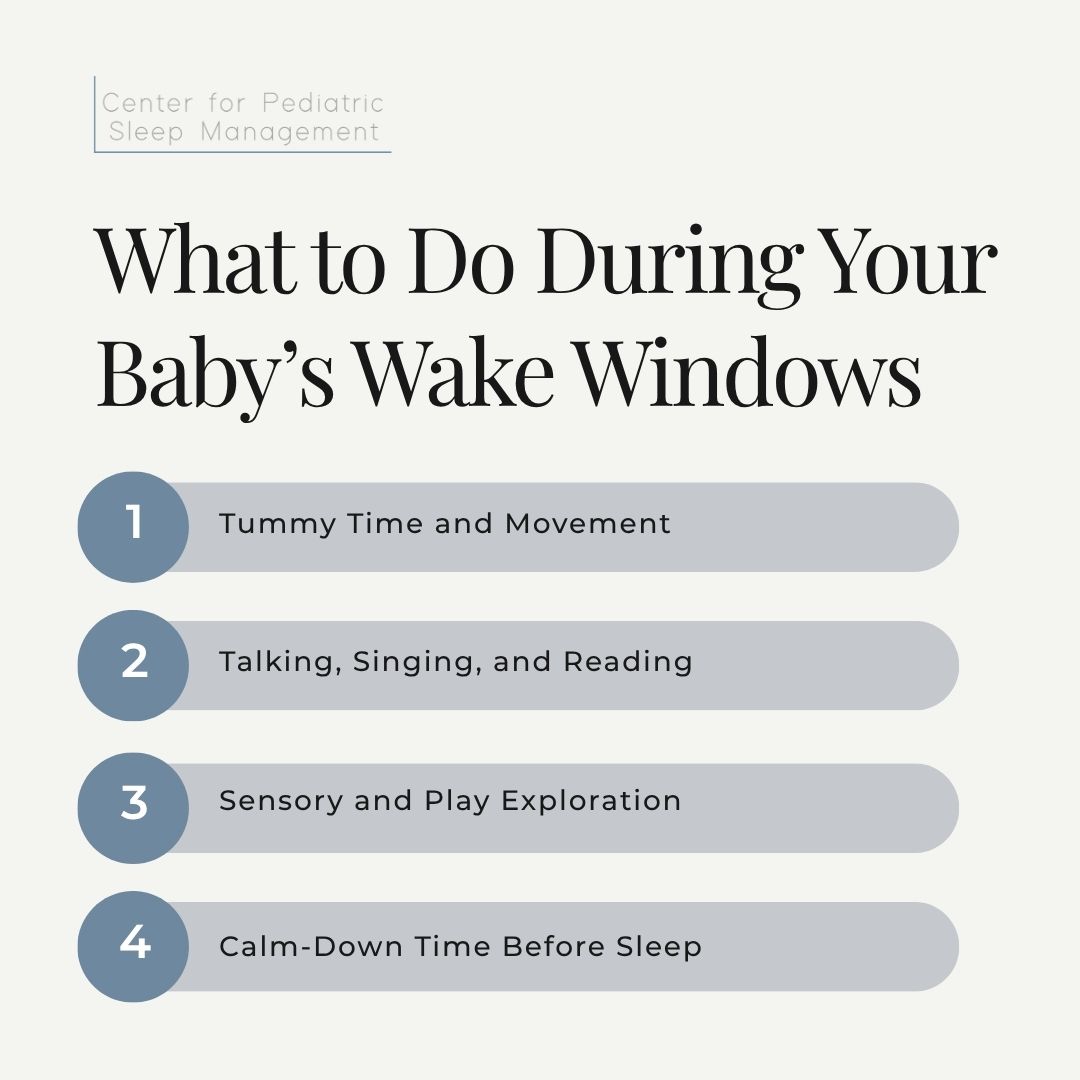
What to Do During Wake Windows
Awake time isn’t just filler between naps. It’s when your baby learns, bonds, and burns a little energy so sleep comes more easily. Here are age-appropriate ways to make the most of those stretches.
Tummy Time and Movement
For younger babies, tummy time builds the neck and core strength that supports so many milestones. For older babies and toddlers, movement means crawling, cruising, and toddling around a safe space. Physical activity during awake time helps your baby settle better later.
Talking, Singing, and Reading
Your voice is your baby’s favorite sound. Narrate your day, sing silly songs, and read simple books together. This kind of gentle connection supports language development and gives you priceless bonding time while your baby is awake.
Sensory and Play Exploration
Offer safe textures, high-contrast images for newborns, and simple cause-and-effect toys for older babies. Play doesn’t need to be elaborate. A few minutes of focused exploration engages your baby’s growing brain without tipping them into overstimulation.
Calm-Down Time Before Sleep
As the wake window winds down, dim the lights and slow the pace. Watch for your baby rubbing their eyes, yawning, or getting fussy. When you see those signs, move toward sleep. A short, consistent wind-down helps babies fall asleep with far less fuss.
Turning Your Love of Baby Sleep Into a Career
If reading through all of this lit something up in you, pay attention to that feeling. A lot of the parents I’ve worked with started right here, fascinated by the rhythms of their own baby’s sleep, and went on to help other families find the same calm.
That’s exactly what we do at CPSM. Our self-paced online Sleep Consultant Training Course teaches you the sleep science behind wake windows, naps, and the full range of methods, from gradual and parent-present strategies through extinction and everything in between. We also teach the business side, so you can actually build a practice, not just learn theory. The CPSM has enrolled 1,100+ students, and I’ve personally supported families through sleep training since 2012 after solving my own son’s sleep challenges.
Curious how the day-to-day really works? Read my article, “What Does a Sleep Consultant Do?” is a helpful place to start. And if you’re ready to map out your path, here’s a full guide on how to become a sleep consultant.
Want to talk it through? Schedule a discovery call with me, Jayne Havens, and we’ll figure out if this work is right for you. Not quite ready to commit? Download our free ebook, Launching Your Career as a Sleep Consultant, and explore at your own pace.
The best part of understanding wake windows by age isn’t just calmer nights at home. It’s realizing you might be the person who helps another exhausted family finally rest.
Cheering you on,
Jayne Havens

Considering A Career in Sleep Consulting?
Download our free e-book filled with information on what sleep consultants do and how running a sleep consulting business might fit into your life.