

How Long Does It Take to Become a Postpartum Doula?

Bringing a new baby home is one of the most beautiful and overwhelming transitions a family will ever go through. Everyone in the household needs support during those early weeks, especially the mother as she recovers and adjusts. But sometimes, getting that support isn’t always something families can manage on their own. That’s where a postpartum doula makes a real difference, stepping in to help families navigate early parenthood with more confidence and less chaos.
Are you drawn to infant care and want to be a steady, knowledgeable presence for families during this vulnerable season? Then becoming a postpartum doula could be the right path for you. It’s a flexible, meaningful career built around emotional support, newborn guidance, and helping families find their footing after birth.
The path to get there starts with a postpartum doula training program, and that’s exactly what this guide covers. I’m walking through the step-by-step process of becoming a certified postpartum doula and breaking down the timeline for you. There are several pathways to choose from. By the end of this guide, you’ll have a clear picture to decide which one makes the most sense for you.
How Long Does It Take to Become a Postpartum Doula?
There is no single timeline for becoming a postpartum doula because the paths look different depending on which program you choose. You can complete a self-paced certification in a matter of weeks. A more intensive program with hands-on learning components, however, may take several months.
But honestly, how long it takes is one piece of a much larger puzzle. How well a program actually prepares you to show up for families with confidence is equally important. The right training takes the time it needs to give you these qualities and knowledge.
What Is a Postpartum Doula?
A postpartum doula is a trained professional who provides non-medical support to families in the weeks following the birth of a baby. Their role is both practical and emotional. Doulas help parents adjust to life with a newborn, providing hands-on guidance that makes those early weeks feel a little more manageable.
That support can look like helping around the house, assisting with the baby’s care, and educating parents on how to properly care for a newborn. The goal is to be a steady, knowledgeable presence during a time when most families are exhausted and overwhelmed.
Still considering whether becoming a postpartum doula is the right path for your career? Read my guide “How to Find a Good Business Idea” for more opportunities you can make your own. You can also read “Birth Doula Salary: Average Pay and Earnings Explained” to get a better idea of what to expect.
What Does a Postpartum Doula Do?
Postpartum doulas offer a range of services aimed at supporting families in navigating the transition into life with a newborn. That support typically includes:
- Supporting newborn care
- Assisting with feeding support, whether breastfeeding or bottle feeding
- Helping parents get rest during the day or providing overnight support
- Offering emotional reassurance throughout the postpartum transition
- Educating parents on newborn behavior and basic care
- Assisting with light household tasks and meal preparation
- Helping parents build confidence in caring for their baby
Want to learn more about how postpartum doulas grow their businesses and expand their services? Check out my guide, “What Services Can I Add to My Postpartum Doula Business?”

How Long Does It Take to Be a Doula for Postpartum?
2-4 Days: Weekend-Long Workshops
Some organizations offer postpartum doula workshops that you can complete over the course of a weekend or just a few consecutive days. These in-person programs are designed to introduce students to the fundamentals of postpartum care in a condensed, instructor-led format.
Workshop topics often include newborn care, maternal recovery, infant feeding, emotional support, and practical strategies for assisting families during the early postpartum period. However, many students choose to continue with additional coursework, reading assignments, practical experience, or other certifications to maintain industry best practices.
2-8 Weeks: Fast-Track, Self-Paced Programs
Some postpartum doula certification programs take as little as 2 to 8 weeks, making them one of the more accessible entry points into the birth and baby space. These programs typically have a self-paced format, which means you move through the material on your own schedule.
The curriculum is largely coursework-based, covering topics like newborn care, infant feeding, and postpartum recovery. Some programs include a short practical component, but many do not. Once you complete the coursework and pass a final assessment, you receive your certification and can begin working with families.
1-3 Months: Standard Training Programs
A standard postpartum training program typically takes 1 to 3 months to complete. These programs go a bit deeper than fast-track options, offering a more thorough foundation in newborn care, infant feeding, and postpartum support.
The curriculum is still largely coursework-based, though some programs also include hands-on hours or mentorship components. Additionally, most are self-paced, giving students the flexibility to work through the content around their existing schedules. Once you complete the program and pass any required assessments, you’ll earn your doula credentials and be ready to start supporting families.
3-6 Months: Structured Learning Programs with Certifications
Structured postpartum doula programs take around 3 to 6 months to complete. These programs are more comprehensive, combining coursework with practical requirements and certifications. In addition to the core doula certification, students commonly complete CPR certification and may add a sleep consulting certification along the way.
The extended timeline reflects a deeper investment in both knowledge and hands-on preparation. By the time you complete the program, you have what you need to help families across a broad range of needs. This level of training tends to appeal to people who want to enter doula work with a well-rounded foundation.
6-12 Months: Comprehensive Pathway with Logged Client Hours
A comprehensive postpartum doula training pathway typically takes 6 to 12 months to finish and earn a certification. These programs go well beyond coursework, ensuring training includes logging real client hours as part of the certification program.
That hands-on experience is what sets this pathway apart from the others. Working directly with families during training builds confidence and sharpens practical skills in a way that coursework alone simply cannot.
By the time graduates earn their certification, they have actual client experience to point to when marketing their services. That matters enormously when you’re trying to build trust with families who have never worked with a doula before. For those who want to enter the field with both knowledge and a proven track record, this is the most thorough route available.
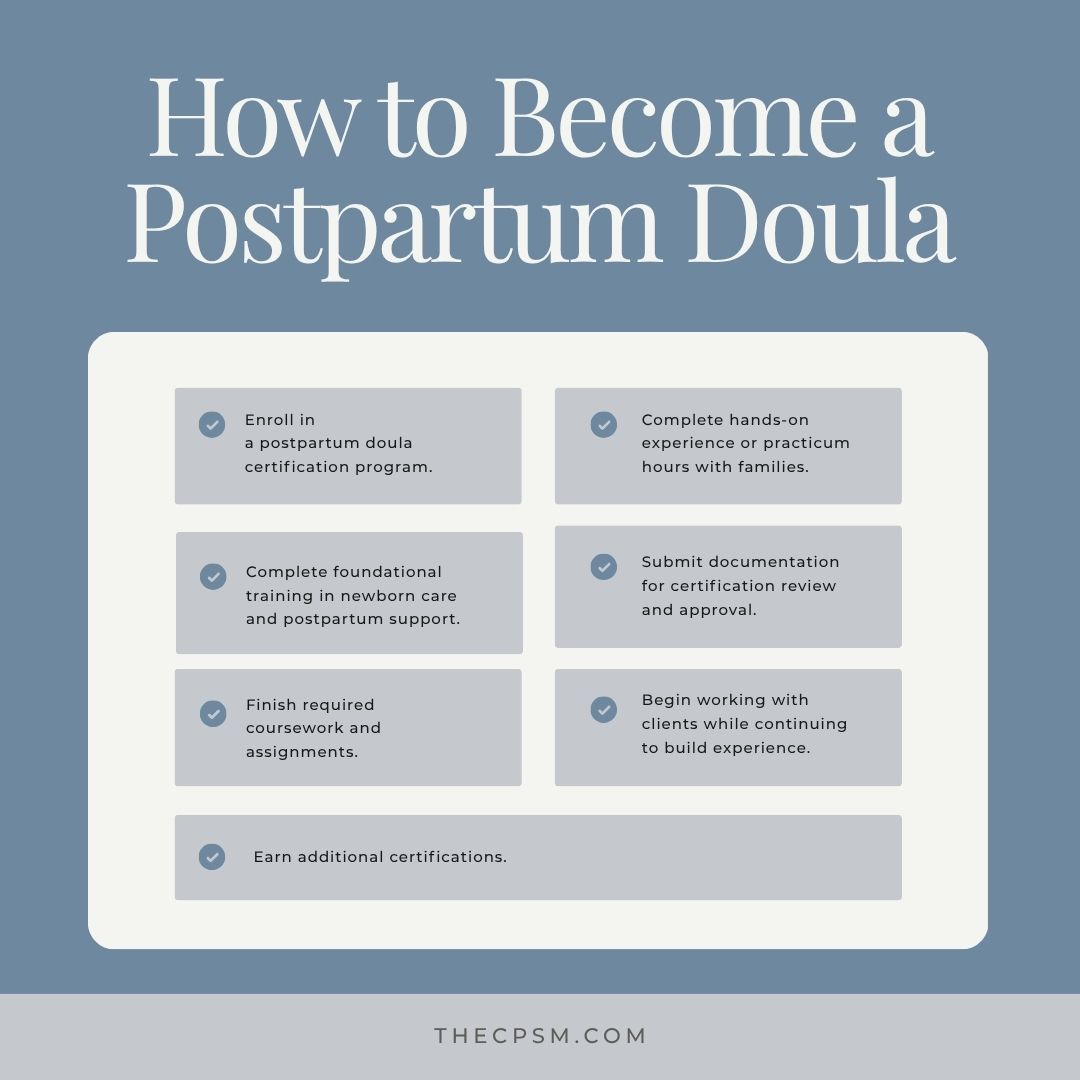
How to Become a Postpartum Doula
Enroll in a postpartum doula certification program.
The first step to becoming a postpartum doula is finding the right certification program. Look for a program with an evidence-based curriculum that teaches accurate, up-to-date practices. These will be far more valuable than courses full of outdated information or one person’s preferred approach.
From there, consider the course format. Self-paced online programs offer flexibility for people with busy schedules. Meanwhile, in-person or classroom-based options work better for those who learn best with structure and accountability. The right choice depends on how you work best, not just what’s most convenient.
Complete foundational training in newborn care and postpartum support.
Depending on which pathway you choose, postpartum doula training can take anywhere from 2 weeks to 12 months to complete. During that time, you’ll learn about newborn and recovering mother care and how to educate families on caring for their baby.
There’s no rush to get through this part. More specifically, this is the foundation upon which everything else in your career is built. So, taking the time to truly understand it and feel prepared to apply it is far more valuable than finishing quickly.
Finish required coursework and assignments.
As you move through the program, you’ll complete modules, assignments, and assessments designed to verify that you understand the material. That distinction matters. You must know how to apply what you’ve learned before you start working with real families. This is what separates a confident, prepared postpartum doula from one who is figuring things out on the job.
Earn additional certifications.
Building a well-rounded foundation means going beyond the core postpartum doula certification. Many postpartum doulas consider adding specialized credentials to their training programs. Certifications like breastfeeding and lactation support, infant sleep, or CPR allow you to consult on a broader range of newborn care topics. It also means families only need to work with one trusted professional rather than coordinating with multiple providers. This is a real selling point when you’re marketing your services.
For postpartum doulas who want to add sleep consulting to their services, the Center for Pediatric Sleep Management (CPSM) is a great place to start. Our certification course’s design helps doulas expand their services with evidence-based knowledge covering safe sleep practices, sleep training, and infant sleep development. It has everything you need to confidently support families throughout their journey.
Complete hands-on experience or practicum hours with families.
A comprehensive postpartum doula training program typically requires between 36 and 48 hours of hands-on experience. This practical component is an essential part of building the confidence and competence to work with families with newborns.
In most cases, this looks like shadowing an experienced postpartum doula or working alongside a mentor as they support real families. It’s your opportunity to see how the work actually unfolds in practice and to begin serving families yourself with someone there to guide you. The DONA International program, for example, requires students to support 3 families for at least 12 hours each before earning certification.
Submit documentation for certification review and approval.
Most postpartum doula programs require graduates to submit documentation before receiving their certification. This step exists to verify that students have actually met all program requirements, not just completed the coursework and moved on.
Depending on the program, that documentation might include logged client hours, supervisor sign-offs, or proof of additional certifications. Submissions typically go through the certifying organization’s online portal or directly via email. A review will confirm that everything is in order before issuing the certification.
Begin working with clients while continuing to build experience.
With your certification in hand, you’re ready to start working with families and building your experience. This is the stage where you decide which services to offer, set your rates, and get the word out about your business. If you’ve also earned additional certifications along the way, make sure those are front and center in your marketing. They add real value to what you offer and justify charging accordingly.
Not sure where to start with the business side of things? Check out my guide, “How to Create a Postpartum Doula Business Plan.” It walks through how to launch and grow your business and land your first clients.
Postpartum Doula Certification Online
Online Certification Offers More Availability
Many postpartum doula certifications are offered entirely online, making them an excellent option for working moms, busy students, or those navigating prior commitments. Rather than having to physically attend a class, the self-paced coursework of 100% online courses allows you to complete lessons on your own schedule. However, for those that would like hands-on help, various online courses also offer virtual classes, mentorship opportunities, and discussion groups.
Depending on the program, you may need to eventually complete hands-on client hours or other certification requirements before earning credentials. However, because the majority of the coursework is self-paced and flexible, it’s often easier to fit training around work, family, and other current jobs.
My post, “Doula Certification Online,” can serve as an essential resource as you manage this process.
Choose a Program That Matches Your Career Goals
Not every online doula certification program looks the same. More specifically, many differ in their curriculum depth, pacing, recertification requirements, and overall cost. While one program may cost a few hundred dollars, another may cost a few thousand. This doesn’t inherently mean one is universally better than the other. What matters is if the program you enroll in matches your career goals and supports your education.
Taking time to compare your options now is a pivotal step in becoming a doula. It allows you to analyze what you want out of your career, how each program can support that, and which program best aligns with your future goals. Additionally, it ensures you enroll in a program that provides a pacing, format, and depth that you need.
Expand Your Services Beyond Postpartum Care
Many postpartum doulas choose to broaden their expertise after certification by pursuing additional education in areas like infant feeding, newborn care, or pediatric sleep. More specifically, the work of a sleep consultant is very similar to that of a doula. Both provide their clients with a high level of personalized and compassionate support and education.
If you’re interested in supporting families beyond the postpartum period, explore my guide, “How to Become a Certified Sleep Consultant.” In this, I explain how sleep consulting can be a purposeful addition to your career. Additionally, my resource, “Reasons Why a Doula Should Be Certified Sleep Consultant” takes a closer look at how these two specialities complement each other!
What to Look for in a Doula Certification Program
When comparing postpartum doula certification programs, remember that the shortest or least expensive option isn’t always the best fit. Instead, look for a program that prepares you to confidently support families while helping you build a sustainable career. Here’s what matters:
- Evidence-Based Care. Choose a program that teaches current, research-informed practices for postpartum recovery, newborn care, infant feeding, and family support. This is essential for helping families better understand their options in this new stage.
- Hands-On Hours. As I mentioned previously, every doula certification program is different. However, practical experience, mentorship, or supervised client hours can help you apply what you’ve learned and build confidence before working independently.
- Respected Certifying Organization. While the doula profession doesn’t have a single governing body, completing training through a well-established, reputable organization can demonstrate commitment to professional education.
- Comprehensive Business Education. If you plan to start your own doula practice, look for training that covers client communication, marketing, pricing, documentation, and business fundamentals alongside clinical skills. At The CPSM, this is a core value of our program. We ensure students have all the tools they need for success moving forward.
- Supportive Learning Environment. Instructor access, peer communities, mentorship, and responsive student support can make a significant difference throughout the training experience. Again, at The CPSM, once students enroll, they receive life-long access to precious education as well as consistent support. This can be a meaningful different between a good postpartum doula certification and one that excels.
How Much Does It Cost to Become a Doula?
The cost of becoming a postpartum doula varies depending on the certification program, learning format, and whether you pursue additional training after earning credentials. While some entry-level courses are relatively low-cost, more comprehensive programs often include mentorship, hands-on training, business education, and continuing support. Here’s a brief breakdown based on average estimates:
- Fully Online Programs typically range from $200-$1,000. These programs generally focus on coursework and are ideal for students seeking a flexible learning schedule.
- Stand Certifying Organizations often cost between $600-$1,300+. However, this can vary depending on the curriculum, instructor access, mentorship opportunities, and hands-on requirements.
- Continuing Education and Specialty Training range from a few hundred to several thousand dollars, depending on the program. However, it can be a strategic method to building your portfolio, expanding your expertise, and broadening your client base.
Doula care costs range between experience, certifications, qualifications, and flexibility. However, many full-time doulas earn a considerable amount monthly. I mention this to say, the certification costs often pay for themselves.
Enhance your postpartum doula services with a sleep consultant certification from the CPSM.
The path to becoming a postpartum doula can take anywhere from 2 weeks to 12 months, depending on the pathway you choose. What matters most is not how quickly you get there but how well-prepared you are when you arrive. The more comprehensive your training, the stronger your foundation, and the more confidently you can show up for the families who need you.
Adding complementary certifications alongside your postpartum doula training makes you even more valuable to families with newborns. If you’re serious about building a well-rounded practice, the CPSM sleep consultant certification course is worth adding to your path.
The self-paced online course gives you the knowledge to offer tailored sleep plans as part of your doula services. For those interested, check our dedicated Facebook Community for aspiring sleep consultants! Here, you can learn more about what this path entails and how you can prepare for the future.
Ready to expand what you can offer families? Enroll in the CPSM sleep consultant course today. Want to talk through whether it’s the right fit? Schedule a free discovery call with me, and we’ll figure it out together.