

How Sleep Consultants Fix Early Morning Wakings
Sleep consultants who have worked with exhausted families or who are experiencing it themselves can attest to just how defeating a 5 a.m. start can be. An early-morning wake-up call is easily one of the most frustrating of all sleep challenges, and, quite frankly, can feel impossible to solve.
Why does this happen? For one, sleep during early-morning hours is typically light and fragile, meaning kids wake up too easily and don’t fall back asleep quickly. To add to that, there are far too many triggers that can cause kids to wake up before parents want them to. (You can see why some parents will tell you they feel “stuck!”)
While it might seem like early-wakes happen randomly, this actually isn’t always the case. Using personalized guidance from a certified sleep consultant, families can learn what may be causing these early wake-ups and what steps they can take to address the problem.
Below, I’m walking through how certified sleep consultants evaluate both a child’s sleep habits and their environment to help provide common sleep strategies when working with infants and children.
How Sleep Consultants Fix Early Morning Wakings
Before recommending a single change, a good sleep consultant looks at the full picture. They’re not looking at the wake time as a standalone factor, but what happened leading up to it.
That means reviewing the entire day: how a child naps, their nap schedule, the timing of the last nap of the day, how they fall asleep at bedtime, and what their sleep environment looks like. As a certified professional, they’re not simply guessinging; they’re identifying what may be contributing to early wake windows and building a plan around a child’s individual needs.
At the Center for Pediatric Sleep Management (CPSM), we teach a client-led approach, which means meeting families where they are. In babies and toddlers, small adjustments often make the biggest difference, so the work starts with understanding, not overhauling everything at once.

What Causes Early Morning Wakings in Babies?
Early waking usually comes down to a handful of common culprits. The tricky part is that they can vary between age groups (babies and toddlers) and individual children. Here’s what may be contributing:
Timing and Sleep Pressure
A child’s sleep pressure builds based on how long they’ve been awake. Too much daytime sleep or naps ending too close to bedtime? That sleep pressure may not carry them through the morning hours. On the other hand, an overtired child can wake early too. Balance matters.
Bedtime That’s Too Early or Too Late
Bedtime timing has a major impact on morning wake time, just as it does for most adults! If a bedtime lands too early, it can lead to a baby waking before the sun. Creating the right approach and schedule really depends on age-appropriate wake windows. If you’re reading this thinking “What is a wake window and how important is it?” My in-depth article on wake windows by age is a helpful place to start.
Nap Schedule and Daytime Sleep
The nap schedule shapes bedtime more than most parents realize. Too much daytime sleep, poorly timed naps, or a nap that runs way too long can all disrupt sleep, leading children to sleep poorly throughout the night or wake up much earlier than parents planned. Small adjustments to daytime sleep can make a meaningful shift in the morning.
Sleep Environment
Light, sound, and temperature all play a role in how well and how long a child may sleep. As morning approaches and sleep cycles lighten, something as simple as a sliver of light through the curtains or early music box noises can be enough to fully wake a baby. A dark, consistent sleep environment gives little ones the best shot at staying asleep for longer periods.
How a Baby Falls Asleep at Bedtime
If a child relies on being rocked or fed to fall asleep at bedtime, they may need that same help to link sleep cycles in the early morning, when they can’t recreate it on their own. This is where independent sleep skills come in. Understanding infant sleep cycles, whether you’re a desperate parent or an interested future sleep consultant, can make it much easier to understand why this matters so much.
How Sleep Consultants Assess an Early Morning Wake
A certified sleep consultant won’t just dive right into a plan without first figuring out what that plan should be. This can look different for every child and largely depends on their overall routine, their patterns, and what helps them fall (and stay!) asleep. Here’s what you can generally expect this to look like:
Reviewing the Full Daily Routine
Whenever I’m helping families (or training future sleep consultants on helping families), I look at the entire day, from morning wake to bedtime. When did the baby wake up? What did the nap schedule look like? How long was the last nap of the day, and how long was the child awake before bed? These details, while they seem small, can tell us a lot about whether timing and sleep pressure are lining up.
Looking at the Sleep Environment
Next comes the sleep environment. Is the room dark enough in the early morning hours? Is there noise from a partner leaving for work or a sibling starting the day? A lot of this is unavoidable (trust me, I get it!) but it helps to know what you’re starting with and what you can adjust. A consultant helps families spot the small environmental triggers that are easy to miss.
Understanding How the Child Falls Asleep
How a baby falls asleep at bedtime tells us a lot about what their early morning wake looks like, and even why it may be happening. If a child hasn’t yet developed independent sleep skills, connecting sleep cycles can feel genuinely difficult, and it’s a common experience that plenty of parents share. This is why a qualified, certified pediatric sleep consultant can make such a difference in a routine.
Considering Age and Amount of Sleep
A sleep consultant will also factor in age and the total amount of sleep a child needs. How much sleep a newborn needs is very different from what a toddler needs, and the right nap schedule shifts along the way. Building good routines here overlaps with learning how to create healthy sleep habits that support better nights and mornings as one blended routine.
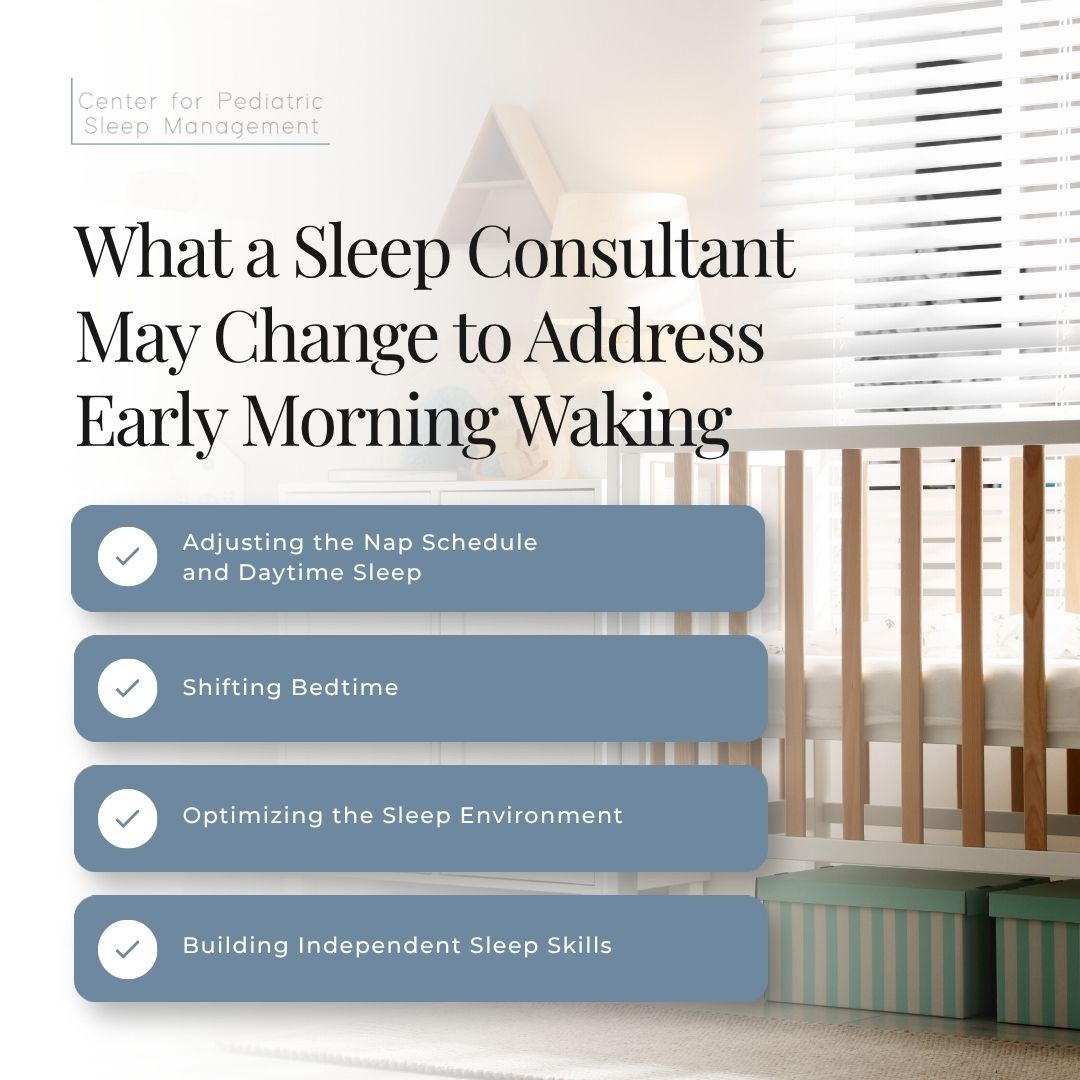
What a Sleep Consultant May Change to Address Early Morning Waking
Once a sleep consultant has fully analyzed a child’s routine, it’s time for them to build a personalized plan that can finally make a meaningful difference. What they recommend isn’t random, and it’s never one-size-fits-all. Your unique schedule can depend on everything from temperament and family routines to sleep environment and a baby’s sleep habits. Here’s what a sleep consultant may adjust:
Adjusting the Nap Schedule and Daytime Sleep
If daytime sleep is throwing things off, the first step is to fine-tune the nap schedule. That might mean shortening a nap here or there, adjusting the wake windows, or making sure a baby can build sleep pressure for early morning hours. Small changes can be the factors that shift the wake time later.
Shifting Bedtime
Sometimes the fix is bedtime itself. Moving bedtime a little later or earlier, depending on the child, can help a baby stop waking so early. But two things matter here: it shouldn’t be done overnight and it’s never something the sleep consultant just guesses about and does. The process typically happens little by little over the span of a few days and is only recommended if the assessment finds that it can be necessary.
Optimizing the Sleep Environment
The sleep environment is often the easiest to control which is why sleep consultants tend to recommend starting here first. Think: blackout curtains, a consistent sound machine, and a comfortable temperature. These factors can protect those fragile early morning hours and keep a baby asleep longer.
Building Independent Sleep Skills
When a child depends on help to fall asleep at bedtime, we work on independent sleep skills so they can link sleep cycles on their own. This can look different for every family, but at The CPSM, we teach a range of gradual or parent-present strategies to methods like Console and Extinction. Most importantly, the method is always discussed with and chosen alongside of the family, never forced or implemented without full understanding of what this looks like.
Setting Realistic Expectations With Step by Step Guidance
The truth is, progress takes patience. With step-by-step guidance, families learn what to expect and how to stay consistent. One night of good sleep isn’t the same as a child consistently sleeping over time, and getting to the finish line takes dedication. However, for many parents, that reassurance matters as much as the plan itself. It’s the difference between giving up and getting to enjoy that first quiet cup of coffee in peace.
Become a Pediatric Sleep Consultant With the CPSM
What causes a baby to wake up earlier isn’t a one-size-fits-all situation. While some children wake due to subtle noises, others wake because their daytime nap lasted a little too long. But if figuring out the trigger, analyzing the situation, and creating a plan that makes a meaningful difference sounds like something you’d enjoy, there’s plenty of resources to help you along the way.
I’m Jayne Havens, and I founded the Center for Pediatric Sleep Management to teach people exactly how to do this. Our self-paced sleep consultant certification course walks you through the sleep science behind challenges like early waking, plus the business training you need to build a real practice. We teach behavioral sleep for babies and toddlers, ages 0 to 4, using our proprietary CPSM Success Method.
Schedule a discovery call with me, Jayne Havens, and let’s talk about whether this path is right for you. Not quite ready to commit? Download our free ebook, Launching Your Career as a Sleep Consultant, and take the first step at your own pace.
Sweet dreams,
Jayne

Considering A Career in Sleep Consulting?
Download our free e-book filled with information on what sleep consultants do and how running a sleep consulting business might fit into your life.