

Sleep Consultant vs Sleep Coach: What’s the Difference?

Ask any tired parent what kind of help they’re looking for, and you’ll hear all kinds of words. Think: sleep consultant, sleep coach, sleep specialist, sleep expert. Honestly, most of them are using these titles interchangeably, hoping someone out there can help their little one finally sleep through the night.
I get it. When you’re running on three hours of broken sleep, the exact job title of the person helping you is the last thing on your mind.
But if you’re thinking about entering this field yourself, the difference matters a lot. I’m Jayne Havens, founder of the Center for Pediatric Sleep Management, and I’ve been supporting families through sleep training since 2012. In this post, I’m walking you through the real difference between a sleep consultant and a sleep coach, what each role actually does, and why proper certification is what gives you the knowledge and confidence to support families well.
Because here’s the truth. These titles can sound like the same thing, but there are meaningful differences in training, approach, and professional positioning. Especially when we’re talking about behavioral sleep for babies and toddlers, which is the lane I’ve worked in for over a decade.
Whether you’re an aspiring sleep consultant or an exhausted parent, this resource is here to help, support, and uplift you.
Sleep Consultant vs Sleep Coach: What’s the Difference?
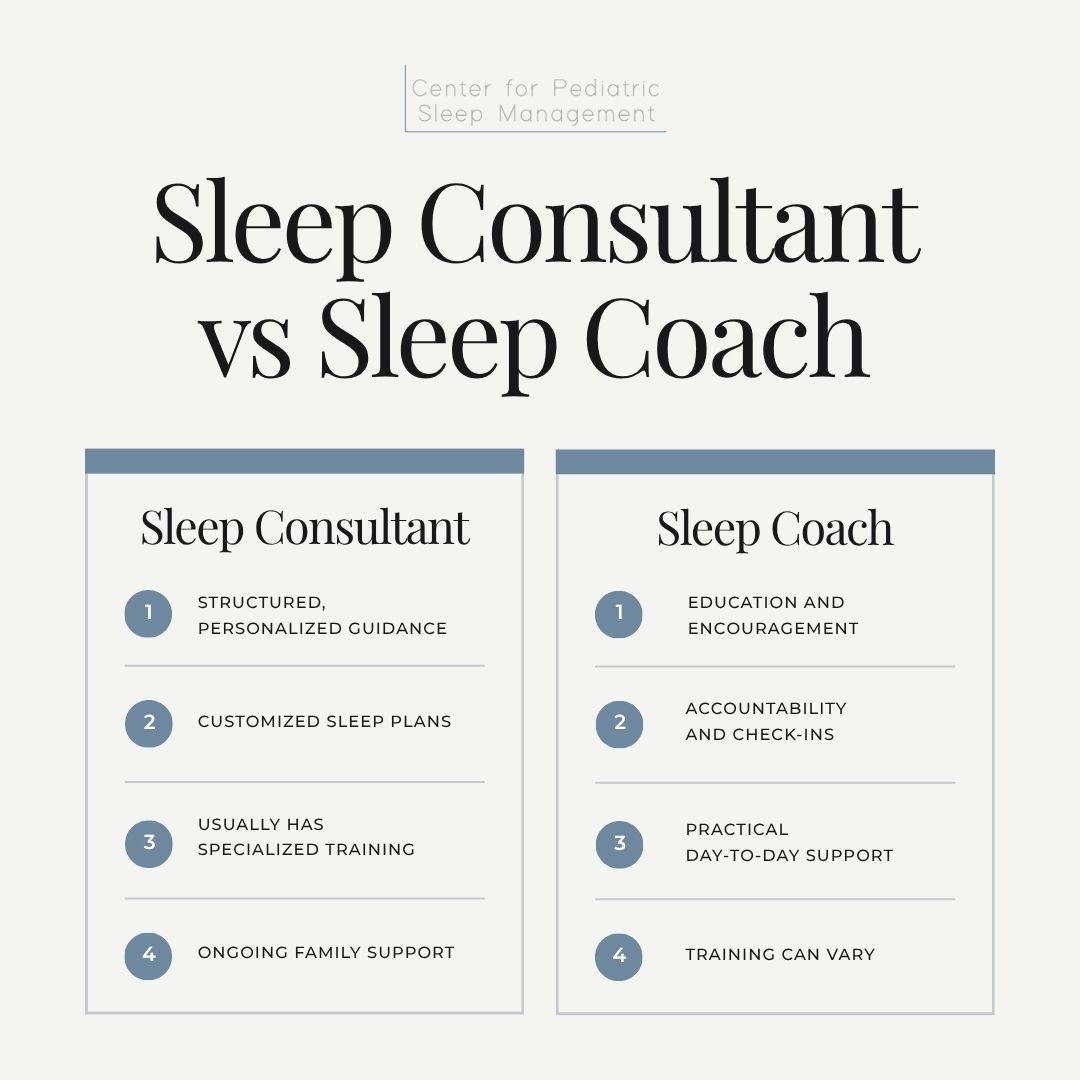
A sleep consultant is a trained professional who helps families address sleep challenges with structured, personalized guidance. A sleep coach is a broader, looser term that can describe someone who supports families through education, accountability, and encouragement.
The overlap is real. Both roles want the same outcome: a well-rested family and better sleeping habits for the whole house. Both work with parents who are exhausted and looking for a plan.
The difference comes down to depth. “Sleep consultant” usually signals someone with structured training who builds a customized sleep plan and walks a family through it. “Sleep coach” can mean that same thing, or it can describe someone offering more general support without a comprehensive education behind it.
And in babies and toddlers, that depth really matters. Behavioral sleep for little ones (ages 0 to 4) involves developmental stages, age-appropriate schedules, and a real understanding of why a baby’s sleep goes sideways. That’s not something to wing.
So my honest advice, whether you’re a parent hiring one or a professional becoming one, is to look past the title. Look at the person’s training, experience, and certification instead.
Are you interested in learning more? Visit my comprehensive guide, “What Is a Pediatric Sleep Coach and How Do You Become One?”
Why Are Sleep Consultant and Sleep Coach Titles Often Confused?
The confusion is baked into the industry itself. Here’s the thing most people don’t realize: pediatric sleep consulting is an unregulated field. There’s no governing body handing out official titles, so professionals are free to call themselves whatever feels right.
That means one person’s “sleep coach” is another person’s “sleep consultant,” and neither title is legally regulated. Parents, aspiring professionals, and the general public end up using them interchangeably because, well, nobody’s told them there’s a difference.
You’ll also see “pediatric sleep coach,” “baby sleep expert,” “infant sleep specialist,” and plenty of other variations floating around online. Because the terminology is so inconsistent, understanding a person’s actual credentials and education becomes even more important. The title tells you almost nothing. The training tells you everything.
Is this path calling to you but you’re still on the fence? Join the CPSM Facebook group, a community full of aspiring sleep consultants asking, answering, and discussing all of the questions you may have.
What Is a Sleep Consultant?
A sleep consultant is a professional who helps families solve sleep challenges through structured, individualized guidance. This is the more formal of the two titles, and it usually implies real training behind the work.
The work starts with listening. A good sleep consultant evaluates a family’s current routines, sleep environment, and daily rhythm before recommending anything. No guessing, and no generic advice pulled from another list of tips they found on Google at 3 am.
From there, the consultant helps identify what’s getting in the way of better sleep. For babies and toddlers, the cause is often behavioral. Think inconsistent routines, unhelpful sleep associations, or a schedule that no longer fits the child’s age. At the same time, a qualified sleep consultant knows when a concern may be medical and should be evaluated by a pediatrician instead. You can learn more about this in my podcast episode, “How Sleep Consultants and Pediatricians Can Work Together with Dr. Sujay Kansagra.”
Then comes the personalized part. Rather than a one-size-fits-all fix, the consultant builds a sleep plan around that specific family, their child, their comfort level, and their goals.
What Does a Sleep Consultant Do?
A sleep consultant wears a lot of hats. Their job is part educator, part planner, part cheerleader. Here’s what the role typically involves when working with families of babies and toddlers:
- Assesses the full picture. They review the child’s age, schedule, sleep environment, and current sleeping habits before making any recommendations.
- Helps identify sleep issues. They pinpoint what’s disrupting the baby’s sleep, whether that’s a nap schedule that’s off or a bedtime routine that isn’t working.
- Creates a customized sleep plan. Every plan is tailored to the family, using the sleep training method that fits their parenting style.
- Educates parents. They explain the “why” behind each step so parents understand what they’re doing and feel confident doing it.
- Provides ongoing guidance. They support families through the follow-through, adjusting the plan as needed for long term, sustainable results.
The best sleep consultants aren’t just plan-makers. They’re teachers. That’s the difference between handing someone a schedule and actually changing how a family sleeps. For those interested in learning more about the profession, I encourage you to read my guide, “What Does a Sleep Consultant Do? Roles and Benefits.”
What Is a Sleep Coach?
A sleep coach is someone who helps families improve their sleep routines through education, accountability, and practical, day-to-day support. The role often leans into the “coaching” side of things: encouragement, check-ins, and helping parents stay consistent.
In practice, plenty of skilled professionals use “sleep coach” and “sleep consultant” to mean the exact same job. The label is often just a personal branding choice.
That said, because “coach” is such a broad term, it can also describe someone with lighter or informal training. Coaching in general doesn’t require certification, so the depth of knowledge behind the title can vary widely from one person to the next.
For families working on their baby’s sleep, that variability is exactly why credentials matter more than the word on the website.
What Does a Sleep Coach Do?
A sleep coach’s role tends to center on support and follow-through. Here’s what that often looks like:
- Educates families on healthy sleep habits and age-appropriate expectations.
- Provides accountability through regular check-ins to keep parents on track.
- Encourages consistency, which is honestly where most families struggle.
- Offers practical, everyday guidance for real-life bumps in the road.
- Helps families make sustainable changes so progress holds over the long term.
The overlap with a sleep consultant is obvious. The real question is always what training sits underneath the support.
Key Differences Between Sleep Consultants and Sleep Coaches
Since the titles overlap so much, let’s put them side by side. These are the areas where you’ll actually see a difference, and they matter whether you’re hiring or becoming one.
Training and Education
This is the biggest distinction. In many cases, the title “sleep consultant” is more commonly associated with professionals who have completed specialized training in pediatric sleep. “Sleep coach” may or may not indicate the same level of education. Because the field is unregulated, neither title guarantees education on its own. That’s why certification is what tells you a professional has done the work.
Services and Approach
A sleep consultant typically delivers a customized sleep plan built around a specific family, then guides them through it. A sleep coach may focus more on accountability and general support. In reality, many certified professionals do both, blending a real plan with hands-on coaching.
You can see how this looks in practice by reading my post, “Infant Sleep Training Methods Sleep Consultants Use.”
Client Support
Both roles support families, but the structure differs. Consultants usually offer a defined package with a plan and follow-up. Coaching can be more open-ended and encouragement-focused. For exhausted parents of a baby who won’t sleep, that structured follow-through often makes the biggest difference.
Are you a current or aspiring sleep consultant unsure how to build packages or pricing? You can learn more in my supportive guide, “How to Quit Your Job and Start a Sleep Consulting Business.”
Types of Sleep Concerns Addressed
A well-trained consultant knows the full range of sleep training methods and can match one to the family, from gradual or parent-present strategies through extinction and everything in between. They also know how to help identify sleeping issues and, just as importantly, when to refer a family to a medical provider. Someone with lighter training may not have that same range or that same awareness of their limits.
How to Become a Sleep Consultant
If reading all this makes you think “I could do this work,” you’re in good company. Many of the people who train with us started exactly there. They’re nurses, doulas, newborn care specialists, teachers, and stay-at-home moms who want meaningful work supporting families.
The path itself is refreshingly accessible. You don’t need a medical degree to become a behavioral sleep consultant. What you need is comprehensive, evidence based education in pediatric sleep, strong communication skills, and the confidence to guide anxious parents through a real plan.
That’s exactly what a quality certification program provides. It teaches you the science of a baby’s sleep, the full range of sleep training methods, and how to build customized sleep plans for real families. If you want the full roadmap, I’ve written a detailed guide on how to become a sleep consultant that walks through each step.
And because this is a business, not just a skill, the right training also covers the entrepreneurial side: setting your rates, finding clients, and building a practice that lasts for the long term.
Get started by enrolling in the Center for Pediatric Sleep Management certification course here.
Why Certification Matters for Sleep Consultants
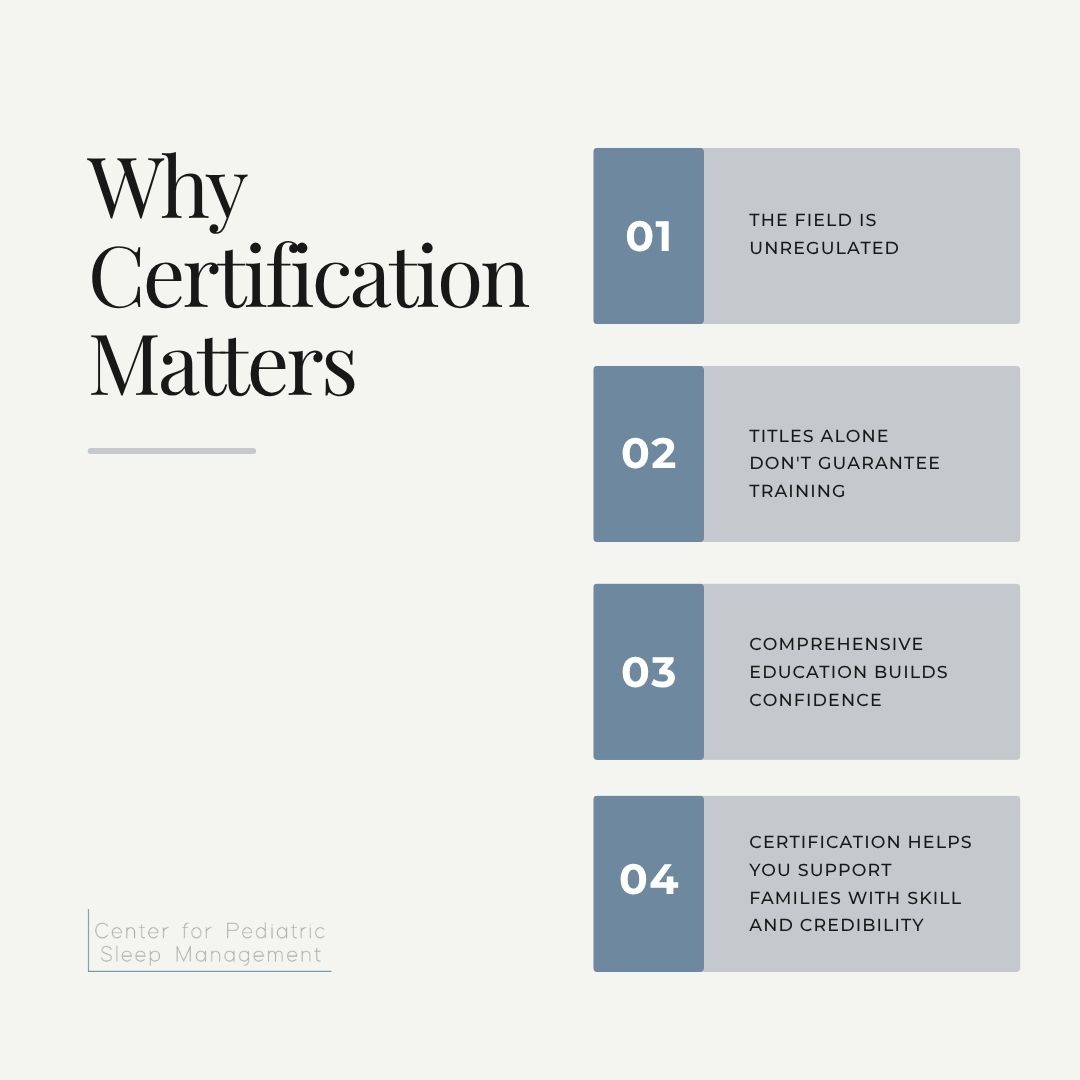
Here’s the part I feel strongly about. Because this field is unregulated, certification is what separates a confident, capable professional from someone winging it with tips from the internet.
Some programs lean on the word “accredited” in their marketing, which honestly can be misleading. No sleep consultant certification is truly accredited, because there’s no governing body to accredit it. So the real question isn’t whether a program is “accredited.” It’s whether the education is comprehensive, evidence based, and actually prepares you to work with families.
Structured education helps you understand pediatric sleep deeply, communicate effectively with worried parents, create personalized sleep plans, and provide informed guidance you can stand behind. It builds credibility, sharpens your professional skills, and gives you a real foundation for a successful career. That confidence shows up on every first call.
At CPSM, our certification is built around the proprietary CPSM Success Method, which combines sleep science with genuine business and entrepreneurship training. Our students tell us it’s the combination of both that makes the difference. More specifically, you learn to help families and to actually build a business doing it. You can compare options and see why ours stands out in this breakdown of the best sleep consultant courses for your budget and goals.
So, is it worth investing in real training? Honestly, yes. If you want to support families with real skill and real confidence, certification is the step that gets you there.
Make a meaningful difference in families lives doing a job you love with the Center for Pediatric Sleep Management.
Ready to turn this into a career you love? Our self-paced online sleep consultant certification course gives you lifetime access to everything: comprehensive pediatric sleep education, a starter library of six books from well-known infant and toddler sleep experts, and an exclusive Facebook community where you get direct access to me. It’s a one-time investment of $2,700, with payment plans available, and no annual fees ever.
Want to talk it through first? Schedule a discovery call with me, Jayne Havens, and let’s figure out if this path is right for you.
Not quite ready to commit? Download our free ebook, Launching Your Career as a Sleep Consultant, and start exploring at your own pace.
If that excites you more than it scares you, that’s a good sign.
Sleep well,
Jayne Havens